Last Updated on 22nd May 2026
Reading Time: 11.3 mins
Published: October 13, 2026
Ofcom has published its Children’s Online Experiences report, which consolidates a broad range of research conducted by the regulator throughout the year. It is one of the most comprehensive pieces of research into how children and young people in the UK use technology, what they encounter online, and how those experiences are changing. These findings are particularly significant.
We are sharing this report because the evidence it contains should directly inform how we engage with children and young people about their online lives, how schools and other settings approach digital education, and how families think and make decisions about online safety at home. The findings are not a distant concern. They describe the everyday experiences of the children in our care right now.
If You Are In A Hurry




The full picture
Ofcom’s report covers children from infancy through to 17years of age. The scale and scope of what it finds should be of interest to everyone working with or caring for children and young people.
Children as young as six months are going online. 85% of all parents say their child looks at a screen regularly. Time online almost doubles between the early teenage years and age 15 to 17, when young people spend an average of two full days a week connected. Meanwhile, reading for pleasure is declining, and offline activities occupy an ever-smaller share of children’s time.
AVERAGE TIME ONLINE PER WEEK
One Day vs Two Days
Children aged 8 to 14-years-old spend an average of one day a week online.
By ages 15 to 17-years-old, it rises to two full days a week.
A NOTE FROM INEQE & SAFER SCHOOLS ON SCREEN TIME
We think about screen time not just in terms of hours and minutes, but in terms of healthy habits and the type of consumption. Two days a week online means something very different depending on what that time is spent doing, with whom, and whether a child has the skills to navigate it well. The question to ask is not only “how long”, but “how” and “with what effect”.

1. The window for intervention is Years 5 and 6
SMARTPHONE OWNERSHIP AT THE PRIMARY- SECONDARY/GRAMMAR TRANSITION
56% to 83%
A 27-point increase between Year 5 and Year 7, from age 10 to age 11, at the secondary/grammar school transition. For most children, this is when digital social life truly begins.
By the time children start secondary/grammar school group chats and social feeds are already shaping their online behaviour. Schools and families that wait until secondary/grammar school to begin the conversation are often already too late.
The evidence points clearly to this age range as an important period for establishing healthy digital habits, setting expectations around phones and apps, and ensuring children know who to turn to and what to do if something goes wrong online.
WHAT YOU CAN DO
If you work in a primary school, build online safety into your Year 5 and Year 6 programmes. If you are a parent or carer, the summer before secondary/grammar school is your most important opportunity to engage and talk about phones, privacy and what healthy behaviour looks like online and offline.
2. Children are turning to AI for friendship and support
AI AS A FRIEND OR SOMEONE TO TALK TO
11%
of 8-17-year-olds who use AI said they have used AI as someone to talk to or “as a friend”.
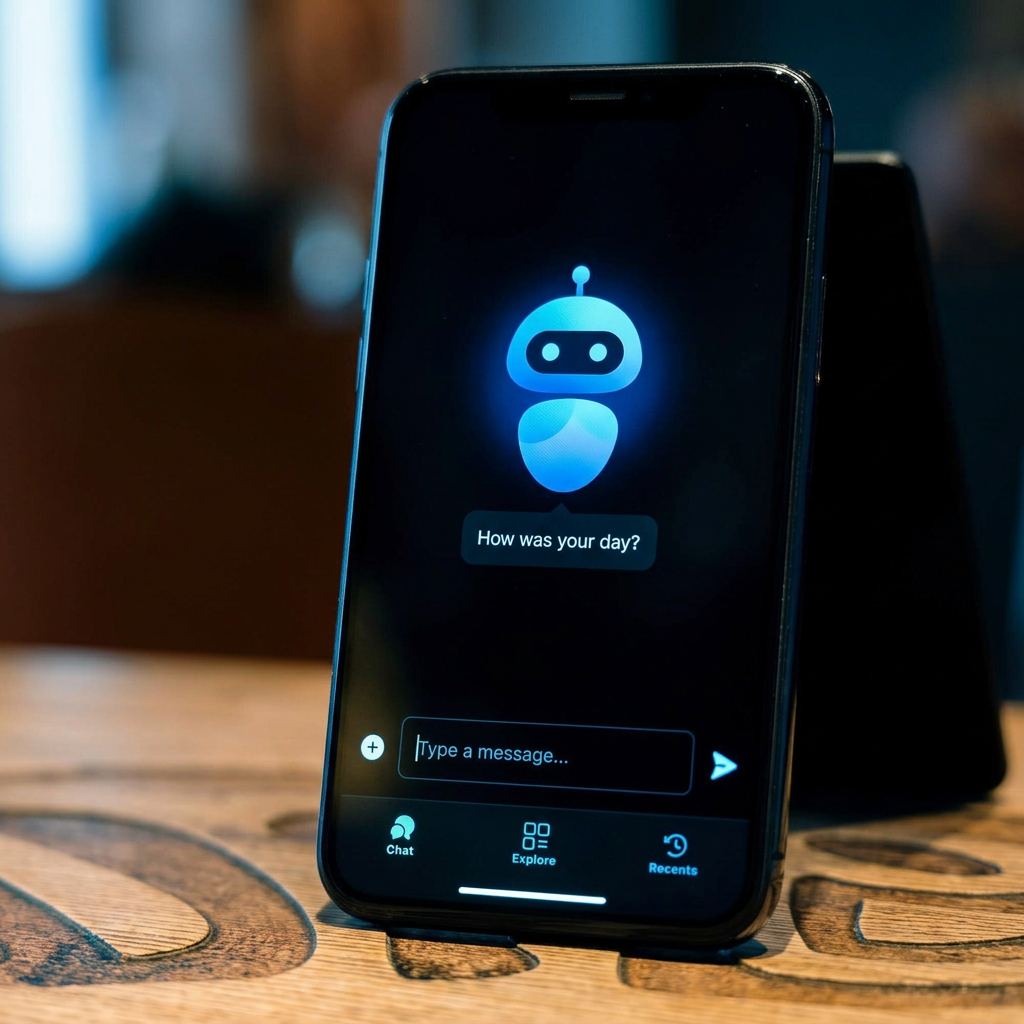
Some children could be turning to AI for support and advice due to the immediate response and positive encouragement it provides. It is important to remember that AI cannot and should not be relied upon to identify risk, escalate concern or provide genuine support.
A child disclosing distress to a chatbot is not being safeguarded. Schools and families may not have begun having conversations about this specific use.
Is a child confiding in a chatbot being safeguarded? Why might that child feel it is the most helpful place to turn?
WHAT YOU CAN DO
Ask the young people you work with or care for what they use AI for. Make it a normal, curious conversation. The goal is to ensure children have trusted adults to turn to, not just a chatbot.
3. Children are confident about AI, but confidence isn’t the same as being safe
CONFIDENCE IN SPOTTING AI CONTENT
56% vs 47%
56% of 13 to 15-year-olds say they are confident spotting AI-generated content, compared with 47% of 16 to 17-year-olds. Separately, 40% of 13 to 17-year-olds say they would trust an AI-generated news article as much as, or more than, one written by a human journalist.
Children aged 13-15 who were confident in their abilities have the least experience to draw upon compared to those aged 16-17, highlighting why early intervention in Years 5 and 6 is so critical. This confidence isn’t earned: when Ofcom tested those who said they could spot AI-generated content, a quarter were unable to correctly identify the AI-generated image they were shown. Confidence does not always equal safety. A child who is overconfident is far less likely to pause, critically question what they see, or ask a trusted adult for help.
WHY THIS MATTERS
Media literacy programmes need to go beyond awareness. Practical testing, modelling curosity and encouraging children to question what they see online are all more effective than simply naming AI as a category of content.
4. Harmful content is still reaching children at scale
EXPOSURE TO HARMFUL CONTENT SINCE THE ONLINE SAFETY ACT
73%
Where reductions have appeared, for example in content encouraging children to consume harmful substances, or content involving harm to animals, the most serious categories have not moved. Exposure to suicide, self-harm and bullying content has stayed level or increased. These are primary priority content harms under the Online Safety Act: the content the law was designed to push out of children’s feeds first. It hasn’t shifted.
The cause is not what children are searching for. It is what algorithms are serving them: 35% of 11 to 17-year-olds report encountering harmful content while scrolling their feeds, against only 1% who searched for it.
Ofcom said TikTok and YouTube are still not safe enough for children.
In March 2026 the regulator wrote to both platforms asking them to set out how they would make their recommendation feeds safer; the deadline was the end of April. Neither platform committed to significant changes, maintaining their feeds are already safe. Ofcom’s evidence says otherwise. Meta, Snap and Roblox have agreed to stronger protections in response to the same regulatory pressure.
Most children aged 8-17-years-old say they feel safe online, but only 40% of parents believe the benefits of social media outweigh the risks. This gap between children’s experience and adult concern is worth acknowledging. This should lead to conversations between adults and children about how to be safer online.

WHAT YOU CAN DO
Help children and young people understand that harmful content can reach them even when they are not looking for it, and ensure they know what to do and who they can talk to if it does. The response matters as much as the prevention.
5. Children are watching, not creating
HOW CHILDREN USE SOCIAL MEDIA
65% consume vs 34% create
For example, more children have viewed livestreams (71%) than created livestreamed content (27%)
Platforms like TikTok and Instagram are used mostly for scrolling and short-form video. Snapchat and WhatsApp are used for communication. Very few children are actively creating content. This matters because passive scrolling exposes children to algorithmic feeds, increasing the risk of encountering harmful and / or illegal content.
6. Parents and children see the online world very differently
CHILDREN WHO FEEL SAFE ONLINE
81%
of 8-17-year-olds feel safe online at least most of the time
PARENTS WHO SEE BENEFITS OUTWEIGHING RISKS
46%
believe the benefits of social media outweigh the risks for children aged between 3 and 17- years-old
Nearly four in ten parents (38%) actively disagree that the benefits outweigh the risks, a near-even split in adult opinion that sits alongside 81% of children saying they feel safe.
Children who feel safe may be less likely to recognise something as a concern in the first place, and as a result, less likely to raise it with an adult they trust. Parents who feel anxious may be more likely to ban or restrict rather than engage in conversation. The goal is not to make children feel less safe or parents feel less worried, it is to close the gap by actively engaging in honest, non-judgmental conversations.
WHAT YOU CAN DO
If a child in your care says they feel fine or safe online, that is not the end of the conversation. It is the beginning. Help them learn to question and recognise when something isn’t right, feeling safe and being equipped to spot a concern are two different things.
7. Gaming is a social space that adults are still underestimating
72%
of 8 to 17-year-olds, and 55% of all children aged 3 to 17, game online.
55%
interact with people they have only met online.
20%
do so all or most of the time.
For many children, gaming is not entertainment. It is the new social frontier and where friendships are formed. Adults who focus exclusively on social media may be missing the space where the most significant online interactions are occurring.
WHAT YOU CAN DO
Ask children about their gaming life with the same curiosity you bring to conversations about social media and smartphones. What do they enjoy about gaming online? Who do they play with? Do any of those people exist only online? What do those conversations look like?
What should this report fuel?
These are starting points, not a checklist. Use these ideas as a launchpad for conversations at home, lesson planning in schools, or adjusting family routines. Pick the approach that suits you best.
The bigger picture
This report arrives as the UK Education Committee calls for a statutory social media ban for under-16s. The Government’s public consultation on this closes 11:59pm on the 26th May 2026, still open at the time of publication, with the Government’s response expected in Summer 2026.
Whatever legislation follows, the evidence in this report is an important reminder than legislation alone is not the answer. It’s requires a whole societal approach. The most important protective factor in a child’s online life is a trusted adult who asks good questions and keeps the conversation going.
“Children and Young People need and want adults they trust to engage with them. Adults who are willing to listen without judgment and who understand the reality of growing up online in 2026, and who can help young people make themselves and each other safer.”
– Colin Stitt, Head of Safer Schools


Build your digital proficiency
At Ineqe Safeguarding Group, and through our Safer Schools Partnerships, we offer digital proficiency training designed to help professionals, educators and parents understand the online world that children are growing up in.
Also available for children, young people our digital courses give you the knowledge and confidence to have better conversations, make informed decisions and support the children in your care more effectively.
Want to know more about our courses? Get in touch: [email protected]
Ineqe Safeguarding Group | ineqe.com | Safer Schools | saferschoolsni.co.uk
Join our Safeguarding Hub Newsletter Network
Members of our network receive weekly updates on the trends, risks and threats to children and young people online.